In short
- A forecast should use collection dates you can support, not invoice dates or hoped-for sales.
- Repeatedly moving payments from one creditor to another can indicate a structural shortage.
- The business must be able to pay current obligations while dealing with historic arrears.
The numbers at a glance
- 920,999
- Small businesses with 1–19 employees at 30 June 2025, calculated from the published 1–4 and 5–19 categoriesSource: ASBFEO using ABS data
- 1,735,470
- Non-employing and self-employed businesses at 30 June 2025Source: ASBFEO using ABS data
- 2,729,648
- Actively trading businesses of all sizes at 30 June 2025Source: ABS business counts
Why a busy business can still run out of cash
Sales and cash arrive at different times. A construction company may wait months for a progress claim, a café may pay wages before weekend revenue arrives, and a wholesaler may pay for stock long before customers pay invoices.
Timing differences are normal. They become dangerous when the company has no reliable way to bridge the gap, or when each new job is needed to pay creditors from the last one.
Questions that help distinguish a timing gap from insolvency
- What exact event will release cash, and how certain is it?
- When will that cash actually clear in the bank?
- Which debts are already overdue, and which fall due before the money arrives?
- Can creditors be given a realistic arrangement they are likely to accept?
- Does the business generate enough margin to cover wages, rent, suppliers, tax and finance after the gap closes?
- Is the forecast dependent on new borrowing or director contributions that are not committed?
Build a useful 13-week cash-flow forecast
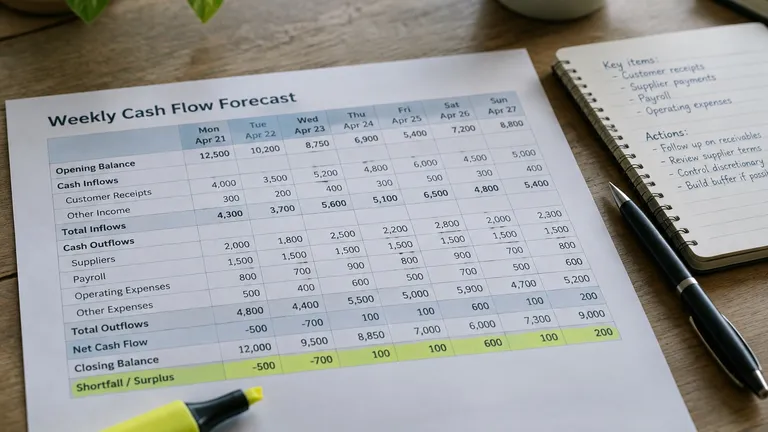
Start with the cleared bank balance, not the accounting balance. For each week, list expected receipts by the date you reasonably expect to receive them. Then list wages, super, rent, suppliers, loan repayments, tax and other essential payments by their actual due dates.
Include current obligations and separate historic arrears so you can see whether the business is viable before old debt is addressed. Update the forecast weekly and compare expected receipts with what actually arrived. A forecast is a decision tool, not a document prepared once for a lender.
Warning signs in the forecast
A temporary gap usually has a clear cause and a credible path back to positive cash flow. A deeper problem is suggested when the shortfall moves forward every week, essential payments are omitted to make the numbers work, or new sales are assumed despite no supporting pipeline.
Another warning sign is needing to default on current BAS, wages or super to pay old creditors. That can mean the business is creating new debt faster than it is resolving the old debt.
What to do if the gap does not close
Do not wait for every creditor to take action. Speak to your accountant and obtain advice on informal arrangements, operational changes and formal restructuring options. Check any deadlines in ATO or creditor notices first.
For an eligible company with a viable underlying business, SBR may allow historic debt to be addressed through a creditor-approved plan while directors remain in control. If the forecast shows continuing losses even after historic debt is removed, the company may need a different response.
Take the next step
This guide is general information. Your company’s debts, records and cash flow need to be assessed before choosing a course of action.
Explore business debt restructuring optionsOfficial sources and further reading
Published 18 November 2026. General information only, not legal, tax or financial advice. Laws, regulator guidance and your circumstances can change the appropriate response.